EpiPen & Epinephrine Guide
Epinephrine auto-injectors like EpiPen can be life-saving during anaphylaxis. Learn what epinephrine is, when to use it, and how to administer it properly.
What is Epinephrine?
Epinephrine (also called adrenaline) is a hormone and medication that can reverse severe allergic reactions.
During anaphylaxis, your body's immune system overreacts and releases chemicals that can cause shock. Epinephrine works quickly to:
- Constrict blood vessels - Raises blood pressure and reduces swelling
- Relax airway muscles - Opens airways and improves breathing
- Stimulate the heart - Increases heart rate and strength
- Reduce hives and itching - Decreases allergic skin symptoms
An EpiPen is a brand of epinephrine auto-injector—a spring-loaded device that automatically injects a pre-measured dose of epinephrine.
Other brands include Auvi-Q, Adrenaclick, and generic versions. While the steps may vary slightly, they all deliver the same medication. Always follow the specific instructions for your device.
Use epinephrine immediately if you experience signs of anaphylaxis:
- Difficulty breathing or wheezing
- Throat tightness or swelling
- Rapid or weak pulse
- Dizziness or fainting
- Severe symptoms after allergen exposure
How to Use an Epinephrine Auto-Injector
Follow these steps carefully. Practice with a trainer device so you're prepared in an emergency.
Important Disclaimer
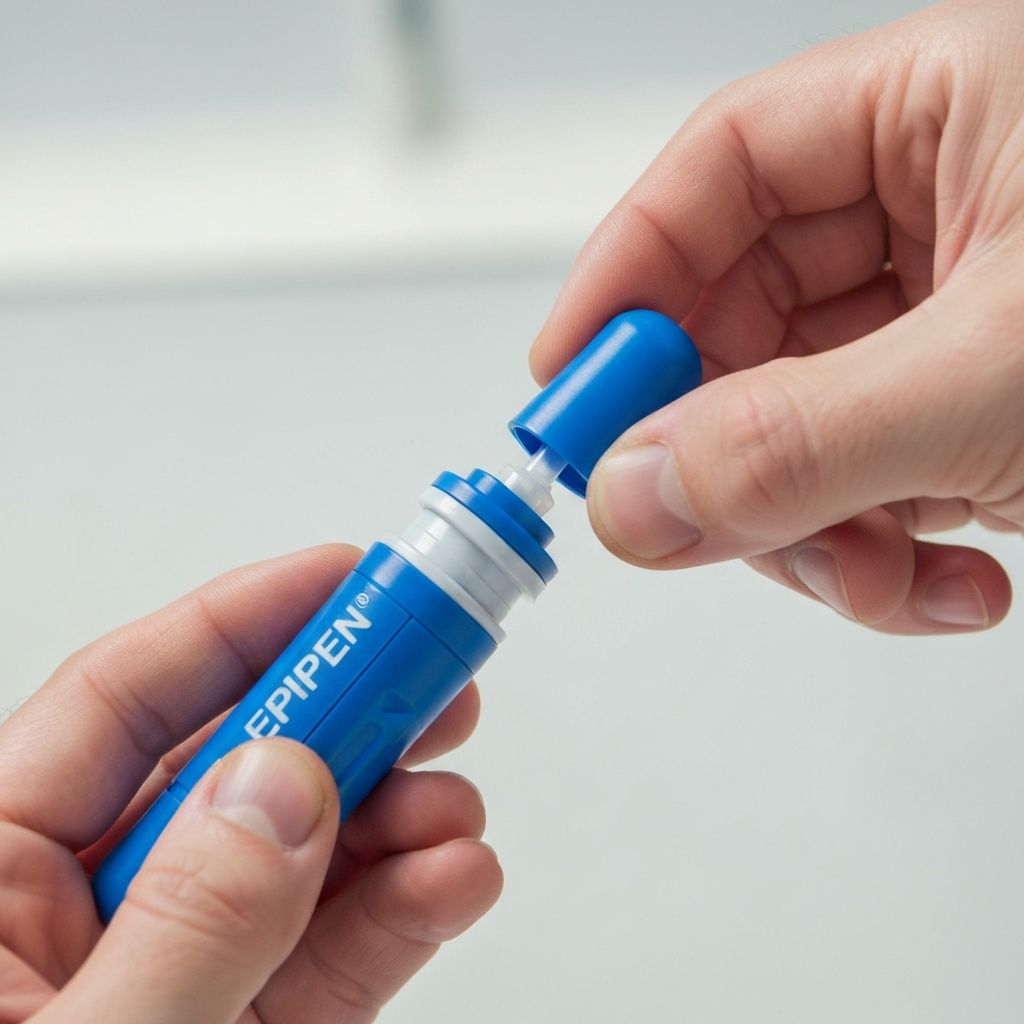
Remove the Safety Cap
Hold the auto-injector in your fist with the orange tip pointing down. Remove the blue safety cap by pulling it straight off. Do not bend or twist.
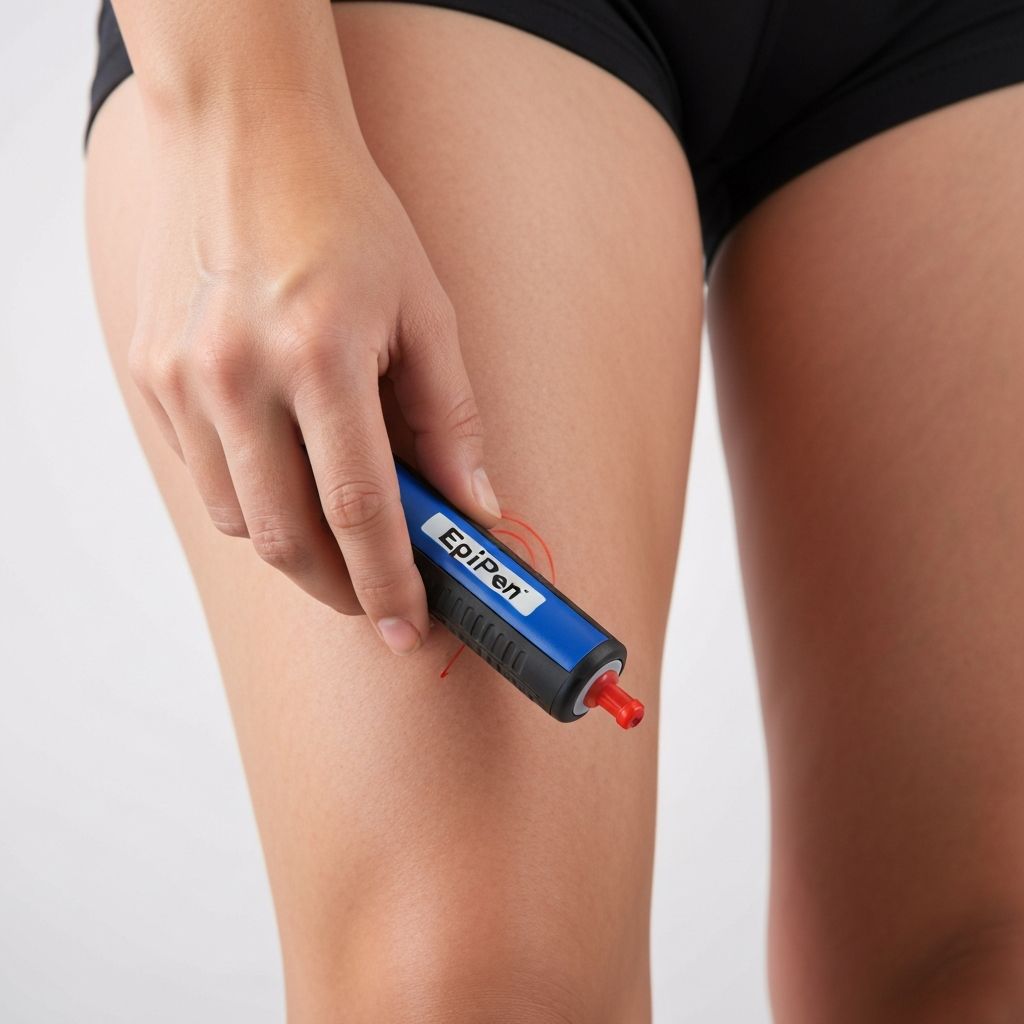
Position Against Thigh
Place the orange tip against the outer thigh, at a 90-degree angle. You can inject through clothing if needed. Do not inject into a vein or buttocks.
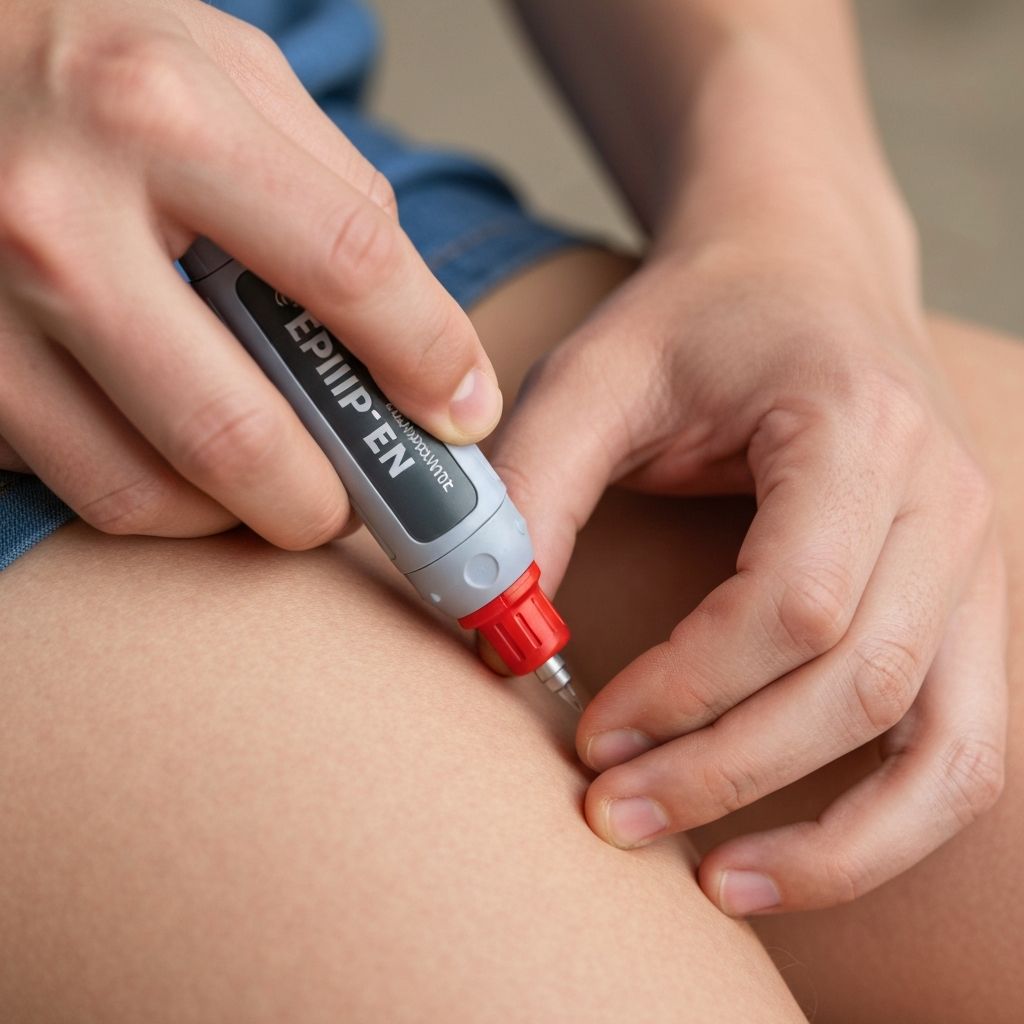
Press Firmly and Hold
Push down firmly until you hear a click. This releases the needle and delivers the medication. Hold in place for 10 seconds.

Remove and Massage
Remove the auto-injector from the thigh. The orange tip will extend to cover the needle. Massage the injection site for 10 seconds.

Call 911 Immediately
Even after administering epinephrine, call emergency services immediately. Note the time of injection. Go to the emergency room for observation.
Common Mistakes to Avoid
- Injecting into the wrong area (buttocks, vein)
- Not holding the injector in place long enough
- Putting thumb over the end of the auto-injector
- Waiting too long to use it
- Not calling 911 after use
- Using an expired auto-injector when a current one is available
What to Do After Injection
Call 911 immediately
Even if symptoms improve, emergency medical care is essential.
Note the time of injection
Emergency responders need to know when epinephrine was given.
Be prepared for a second dose
If symptoms return or don't improve after 5-15 minutes, a second dose may be needed.
Keep the used auto-injector
Give it to emergency personnel so they know the dose and can dispose of it properly.
Safe Storage & Handling
Proper storage ensures your epinephrine will work when you need it most.
Store at room temperature (68-77°F / 20-25°C). Do not refrigerate or freeze.
Keep in the carrier tube to protect from light. Light can degrade the medication.
Check expiration date regularly. Replace before it expires. Set reminders for renewal.
Solution should be clear and colorless. If discolored, cloudy, or has particles, do not use.
Expiration Reminders
Ready to Learn More?
Practice with a trainer device and make sure everyone who may need to help you knows how to use your auto-injector.